Department of Defence

Shaping a 3-year strategy and roadmap for Defence travel transformation

Fragmented efforts across a complex delivery landscape

Following an initial discovery phase, Defence had a clearer understanding of user pain points across the travel ecosystem, but delivery efforts remained fragmented.

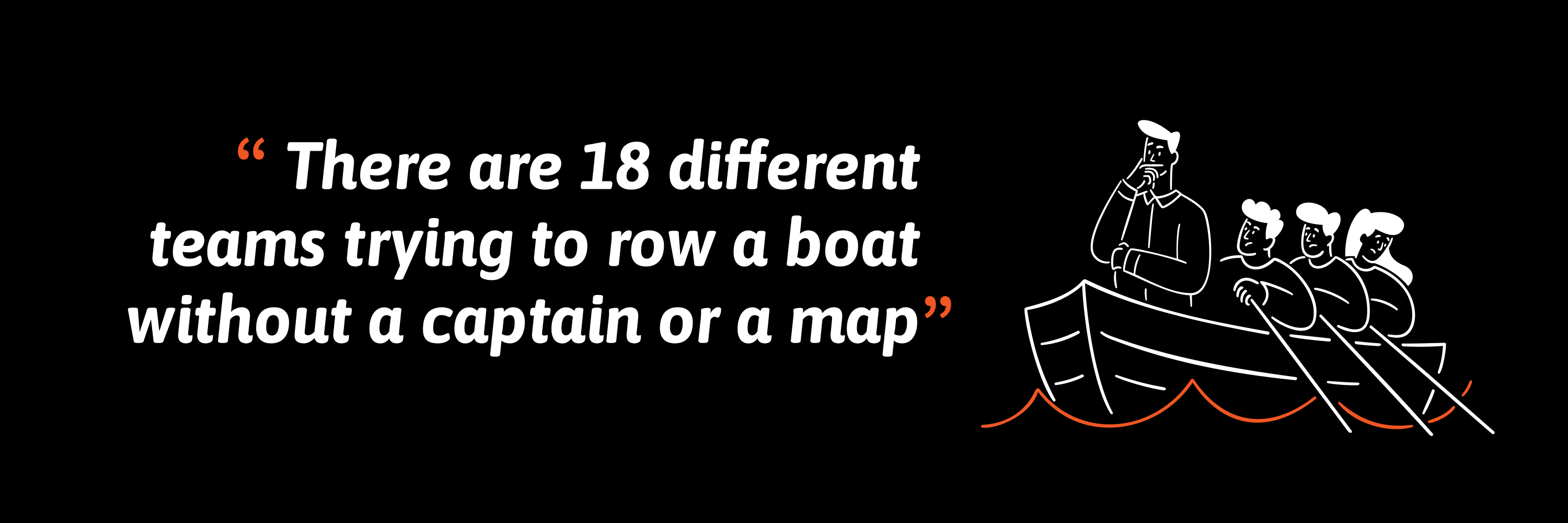
Eighteen teams across Defence were independently progressing initiatives to improve travel capability, often without visibility of overlapping efforts, dependencies or shared priorities. This created duplication, misalignment and slowed progress toward meaningful, system-wide improvement.

There was a need to align teams around a single vision, prioritise effort, and create a coordinated path forward.

What we did

  • Service strategy & design
  • Narrative story telling
  • Executive communications
  • Stakeholder coordination
  • Visioning
  • Roadmap development
  • Delivery planning (schedules, plan on a page)
Quote reading: "There are 18 different teams trying to row a boat without a captain or a map", alongside an illustration of a puzzled person standing in a rowing boat while three others row.

Mapping current initiatives across Defence travel teams

We began by identifying and mapping all active travel-related initiatives across the 18 teams, focusing on work beyond business-as-usual activities.

This was visualised in a roadmap view, highlighting:

  • Overlap in effort across teams
  • Unmanaged dependencies
  • Gaps in capability uplift

This created a clear picture of the current state and exposed the need for a more coordinated approach.

Aligning leadership around a unified travel strategy

We worked closely with the Travel Board and Senior Executive Suite stakeholders to define and align on the purpose and intent of a unified travel strategy and roadmap.

Through a structured cadence of Travel Board engagements, we combined clear, strategic communication with evidence-based insights to highlight misalignment across existing initiatives and build a compelling case for change. We facilitated discussions that cut through organisational silos, enabling senior leaders to align on shared priorities and make informed decisions on where to focus effort.

By presenting the roadmap iteratively, we created a feedback loop that allowed for rapid refinement, early direction on priorities and stronger executive ownership. This approach not only ensured alignment at the leadership level but also fostered collaboration across teams, establishing a clear and coordinated path forward for delivering travel transformation.
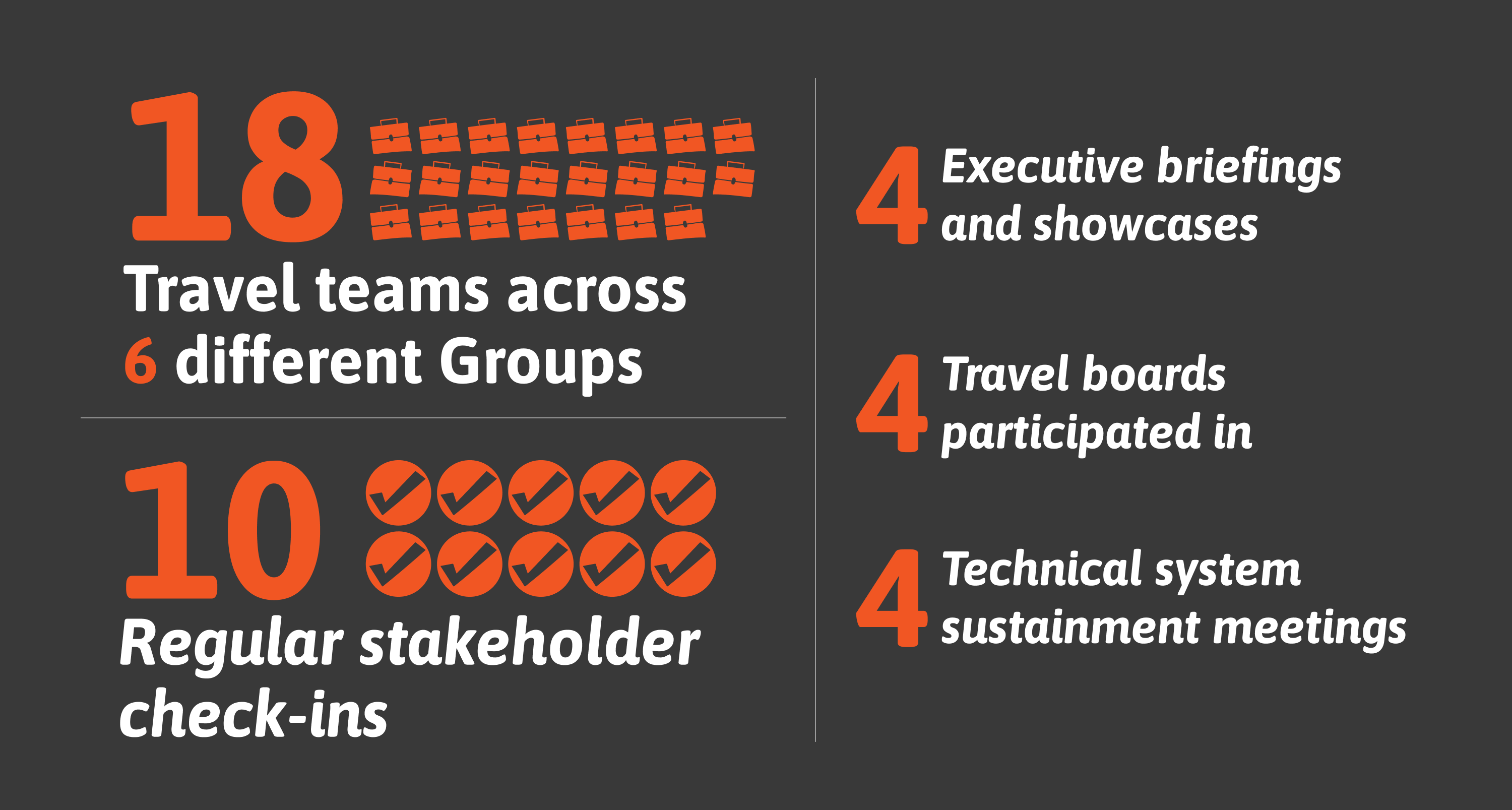
Stakeholder engagement snapshot: 18 travel teams across 6 different Groups, 10 regular stakeholder check-ins, 4 executive briefings and showcases, 4 Travel Boards participated in, and 4 technical system sustainment meetings.

Translating user insights into target state capabilities

Building on insights from the discovery phase, we developed the travel strategy through:

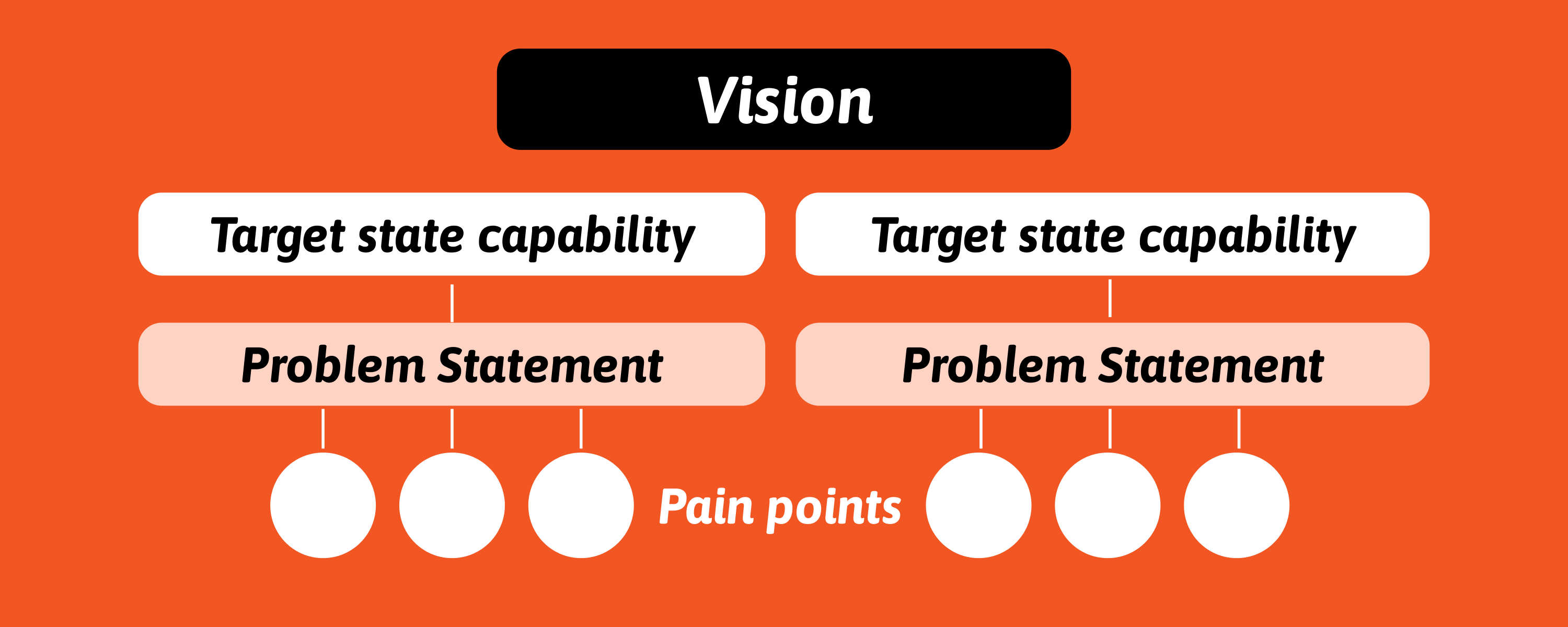
  • Synthesising user and business pain points into core problem statements
  • Reframing these into 15 target state capabilities required for the future of Defence travel
  • Defining what success looks like from both user and business perspectives

This ensured the strategy remained grounded in real needs while supporting organisational objectives such as compliance, financial oversight and data traceability.

Diagram showing groups of pain points rolling up into problem statements, each problem statement mapping to a target state capability, and the target state capabilities together supporting a single vision.

Crafting a strategic narrative for alignment and clarity

To bring the work together and align the 18 travel teams, we developed a centralised, evidence-based story that articulated the key problems to solve, the strategic direction and vision and how it needs to be executed.

We did this through developing a comprehensive insights report that articulated:

  • The current state of Defence travel
  • The vision for the future experience
  • The 15 target state capabilities
  • The roadmap to realise this vision

This provided a clear, cohesive narrative to support decision-making, ongoing communication and the evidence-base to back future changes.

Designing a prioritised 3-year roadmap

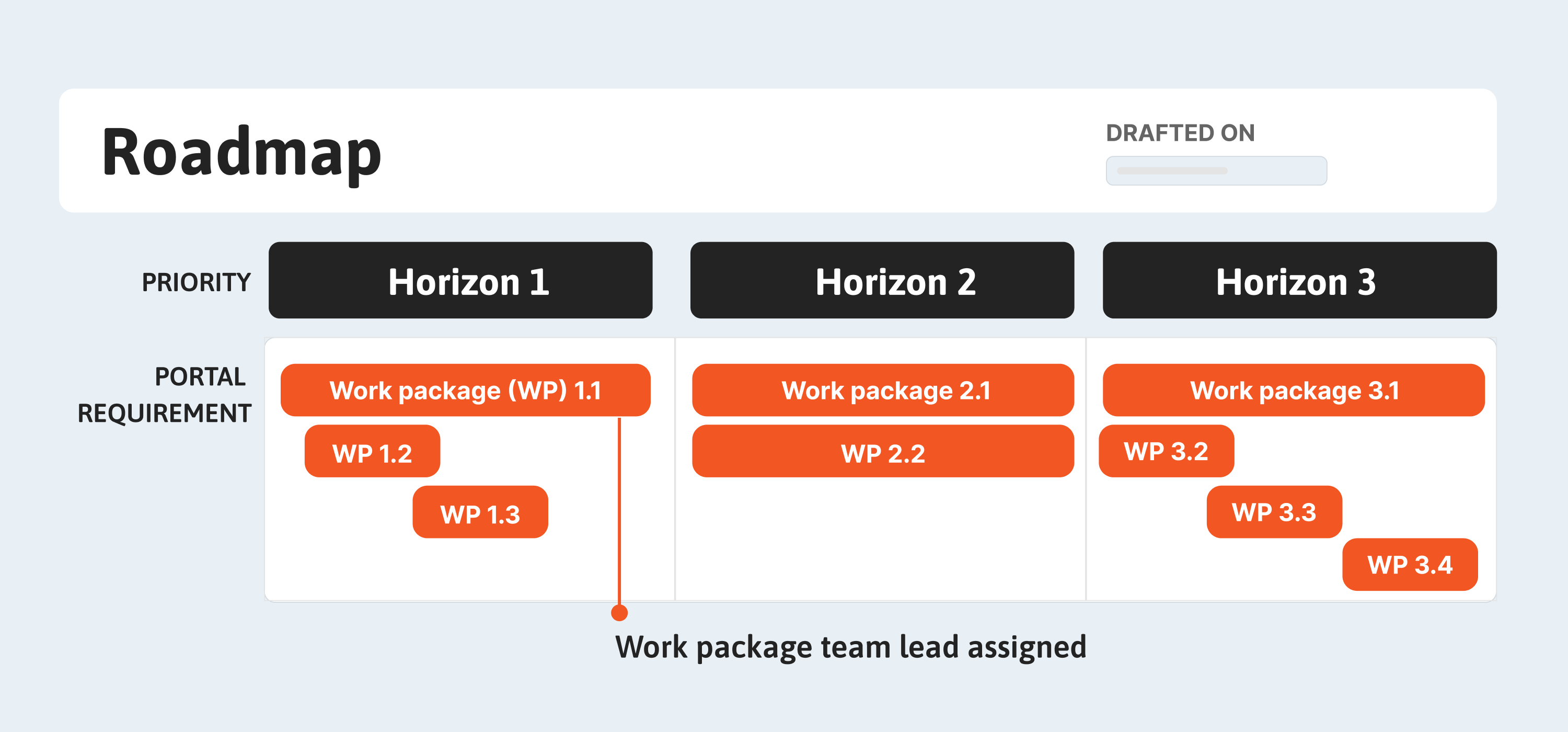
We developed a structured, multi-horizon roadmap to guide delivery over a three-year period.

To achieve this, we:

  • Conducted a comprehensive capability maturity assessment across the Defence travel ecosystem
  • Defined initiatives required to deliver each target capability and close maturity gaps
  • Allocated ownership across teams
  • Grouped initiatives into discrete work packages
  • Prioritised these into Horizons 1, 2 and 3 based on where improvement efforts would deliver greatest maturity uplift

Prioritisation was driven by a combination of capability maturity, user experience, business value and delivery feasibility. This ensured the roadmap sequenced effort in a way that delivered early wins in the areas of greatest need while establishing the foundations for longer-term transformation.

De-identified roadmap structure showing work packages prioritised across Horizon 1, Horizon 2 and Horizon 3, with a team lead assigned to each work package.

Co-designing delivery plans with implementation teams

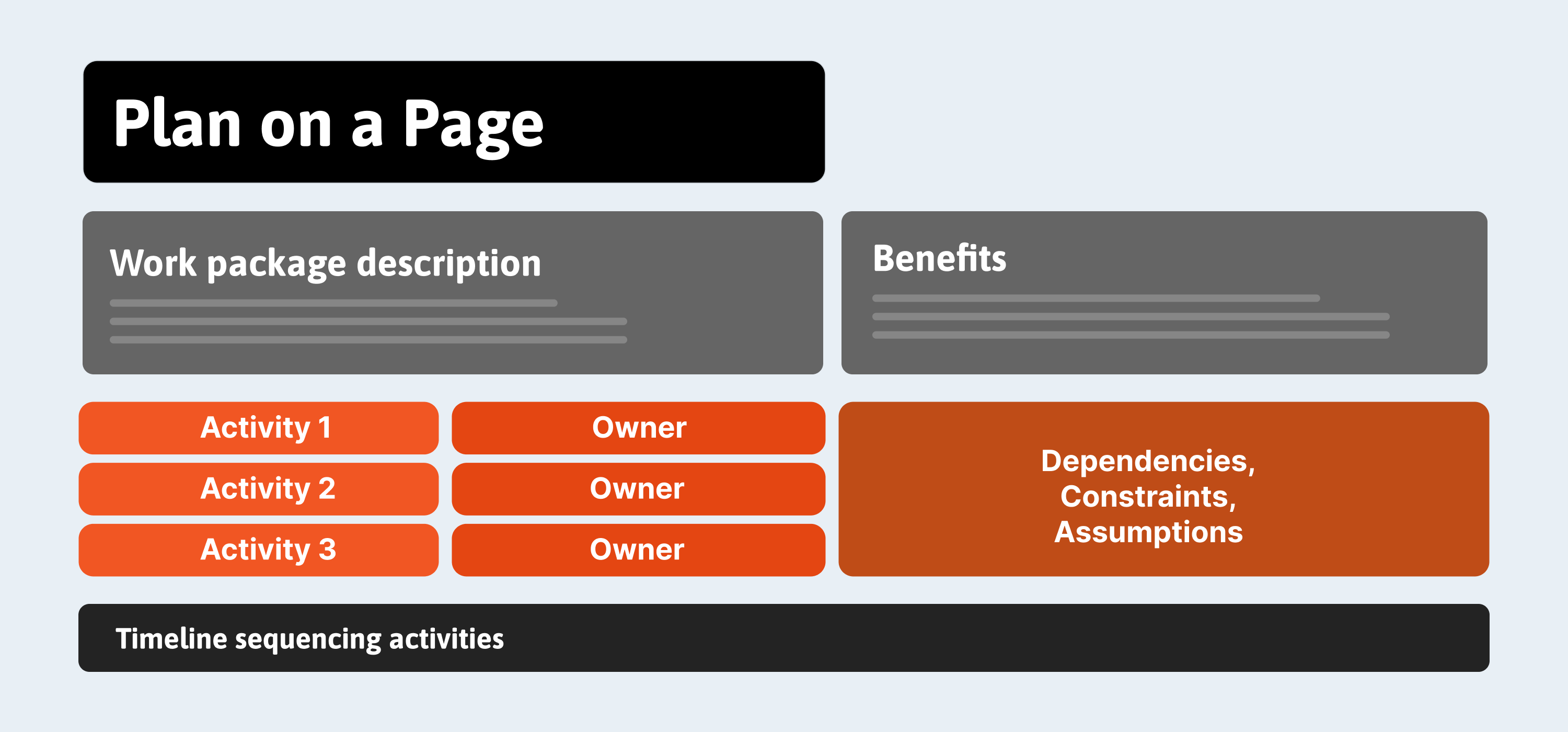
To bring more tactical planning into the roadmap and strategy we worked with delivery teams to develop plans on a page for each priority Horizon 1 initiative. This empowered teams to align on scope, sequencing of work effort and clarity on ownership across teams to achieve the roadmap.

Beyond planning, we supported a smooth transition into delivery through regular syncs and knowledge-sharing sessions with implementation teams. These sessions were designed to embed context, share the rationale behind decisions, and build confidence in applying the service design approach in practice.

This ongoing engagement ensured teams were not only equipped with clear plans, but also with the understanding and capability needed to carry the work forward, strengthening ownership, reducing delivery risk and enabling continuity from strategy through to execution.

De-identified plan on a page structure with a work package description, benefits, activities and their owners, dependencies, constraints and assumptions, and a timeline sequencing activities.

A unified strategy and roadmap for coordinated delivery

The Jude team were able to unpack a highly complex problem space in Defence that had been a known issue for over a decade. Jude delivered a clear, evidence-based travel strategy supported by a prioritised three-year roadmap, enabling Defence to align 18 teams around shared goals and coordinated delivery.

The work established a structured approach to translating user and business needs into actionable initiatives, creating clarity on priorities, ownership and sequencing of effort.

By aligning leadership through ongoing Travel Board engagement and grounding decisions in user insights and operational realities, Defence is now equipped with a single, cohesive plan to incrementally uplift travel capability in a way that is strategic, feasible and scalable.

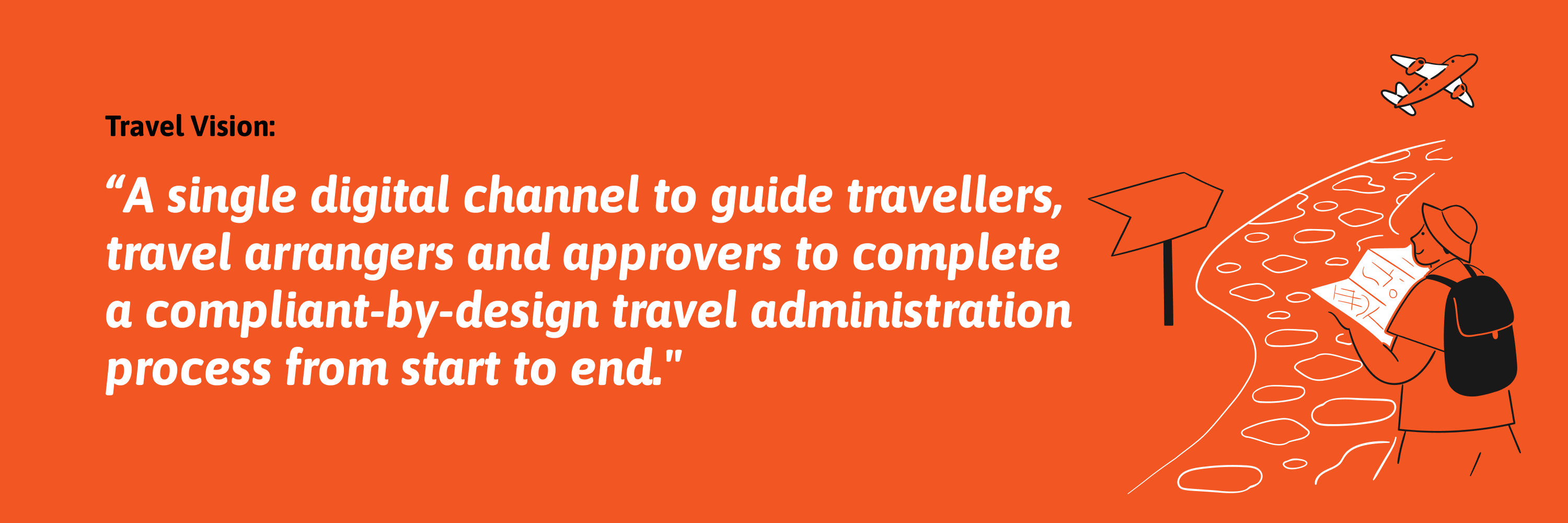
Travel Vision: "A single digital channel to guide travellers, travel arrangers and approvers to complete a compliant-by-design travel administration process from start to end." Illustrated with a traveller reading a map on a winding path beside a signpost, with a plane overhead.

Methodologies we used

  • Design double diamond
  • User research synthesis
  • User journey mapping
  • Prioritisation framework
  • Problem framing
  • Affinity mapping
  • Channel assessment and volume analysis
  • SAFe / agile delivery
Testimonial: "Through deep user research, extensive stakeholder engagement and a rigorous, evidence-based approach, Jude transformed a fragmented travel ecosystem into a clear, actionable pathway for change that Defence can continue to build on." Amrutha Sritharan, A/Director, Design Capability, Department of Defence.