Department of Defence

Simplifying travel through discovery with end users and stakeholder co-design

How we explored a complex travel ecosystem to improve the end-to-end experience

Defence operates one of the largest, and highly complex travel ecosystems in the Australian Government. It is required to support a high volume of domestic and international travel across diverse user groups – from business trips to deployment missions for its 100,000 strong workforce. Travel processes were difficult to navigate, content was fragmented across systems, and users struggled to find clear, actionable guidance. This created friction for travellers, administrators and approvers alike, impacting efficiency, compliance and user experience.

What we did

  • Discovery exploration
  • Workshop facilitation
  • Co-design sessions
  • User journey mapping
  • Ecosystem mapping
  • Site & customer call centre analytics
  • Wireframes
  • Contextual interviews
  • Concept testing
  • Content audit
  • Information architecture
  • Content strategy
  • Content design & publishing
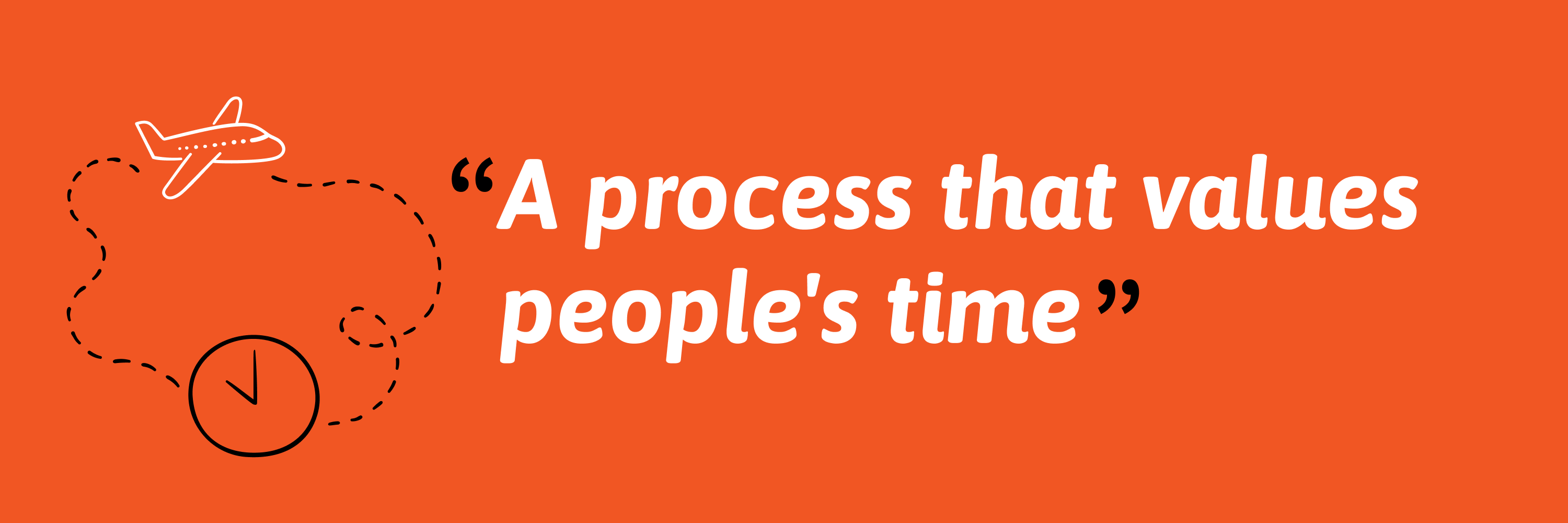
Quote reading: "A process that values people's time."

Mapping the end-to-end travel ecosystem

We began with a broad exploration of the current travel landscape to understand who interacts with the ecosystem, the systems and processes underpinning travel and the policy constraints shaping decision-making.

Complexity in this space was unpacked, considering the various travel scenarios that can occur (such as business meetings, training, and exercises), the variation in security requirements in different areas of Defence, and the type of Defence employee and family structure that influences taxes and travel benefits. Each of these considerations determined how a traveller needed to navigate travel processes and systems.

Mapping the complete travel ecosystem created a shared, enterprise-wide view of travel and highlighted key areas of complexity and opportunity that cut across Group and Service organisational divides.

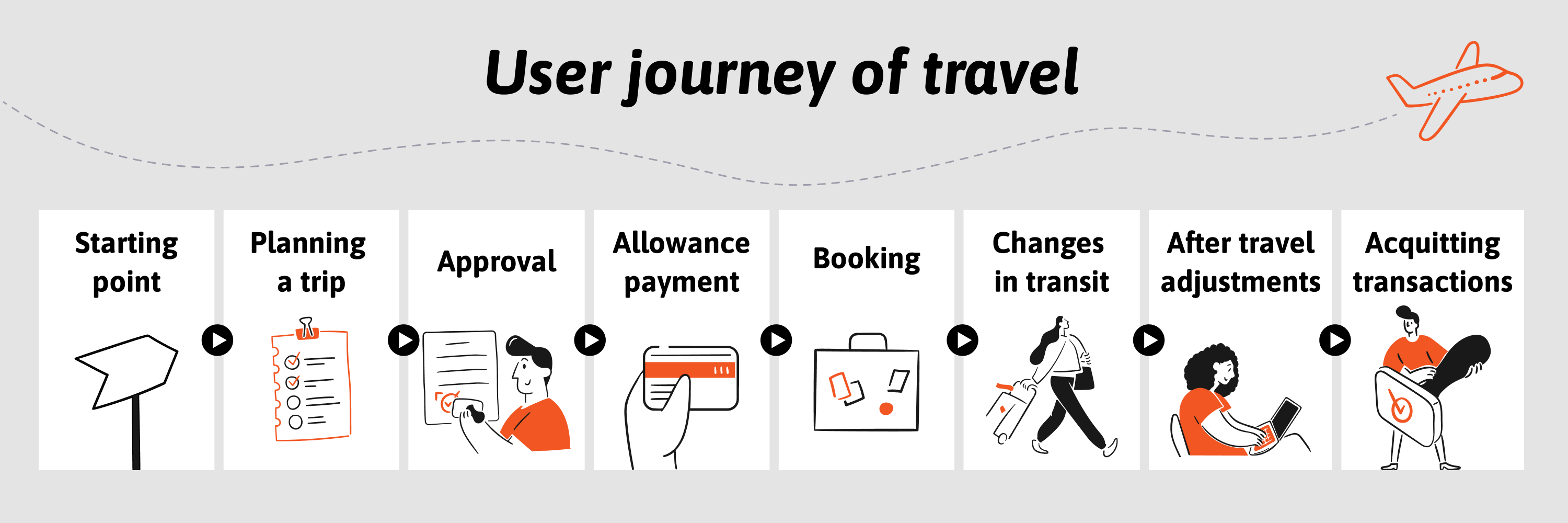
Diagram showing the user journey for travel: Starting point, Planning a trip, Approval, Allowance payment, Booking, Changes in transit, After travel adjustments, and Acquitting transactions.

Establishing a scalable discovery framework

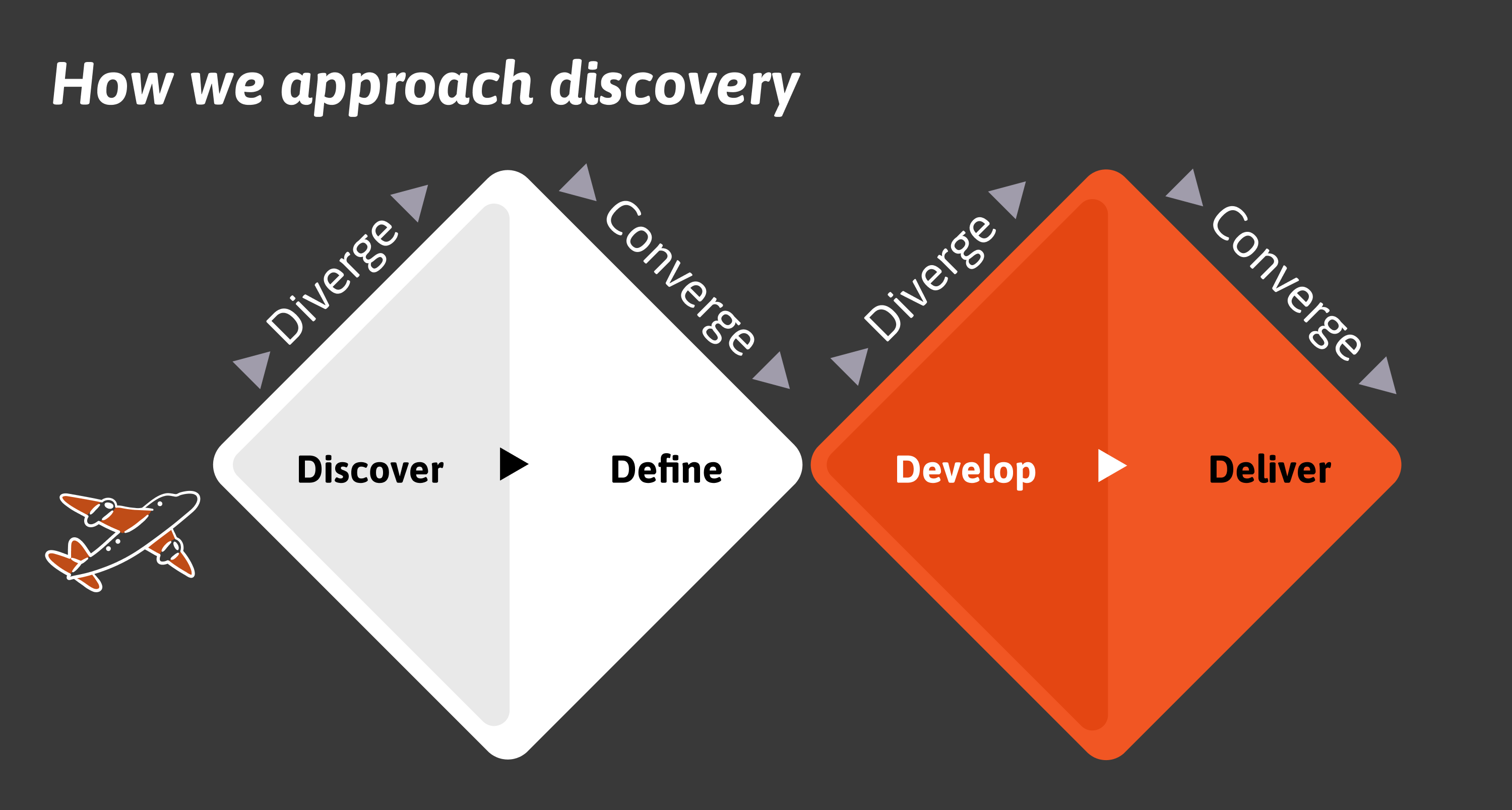
We shaped a new discovery process for the Capability Design team using proven design thinking methodologies and frameworks.

Through structured analysis of the current state and stakeholder prioritisation and voting sessions, we narrowed focus to priority problem areas in the travel ecosystem. This allowed us to deep dive into areas with significant user pain points and barriers, critical process bottlenecks, and areas heavily constrained by limited system functionality and policy complexity.

This approach ensured effort was focused on solving the problems that mattered most. Providing a repeatable, scalable model to explore travel problems systematically, prioritise high-impact areas consistently and guide future discovery work across the ecosystem.

Double Diamond design process illustrating Discover, Define, Develop and Deliver, with diverging and converging phases throughout discovery and delivery.

Embedding user research and real-world insights

A strong user-informed approach was embedded throughout the project. Insights were initially drawn from existing research and artefacts, travel intranet feedback and customer enquiry and call centre trends.

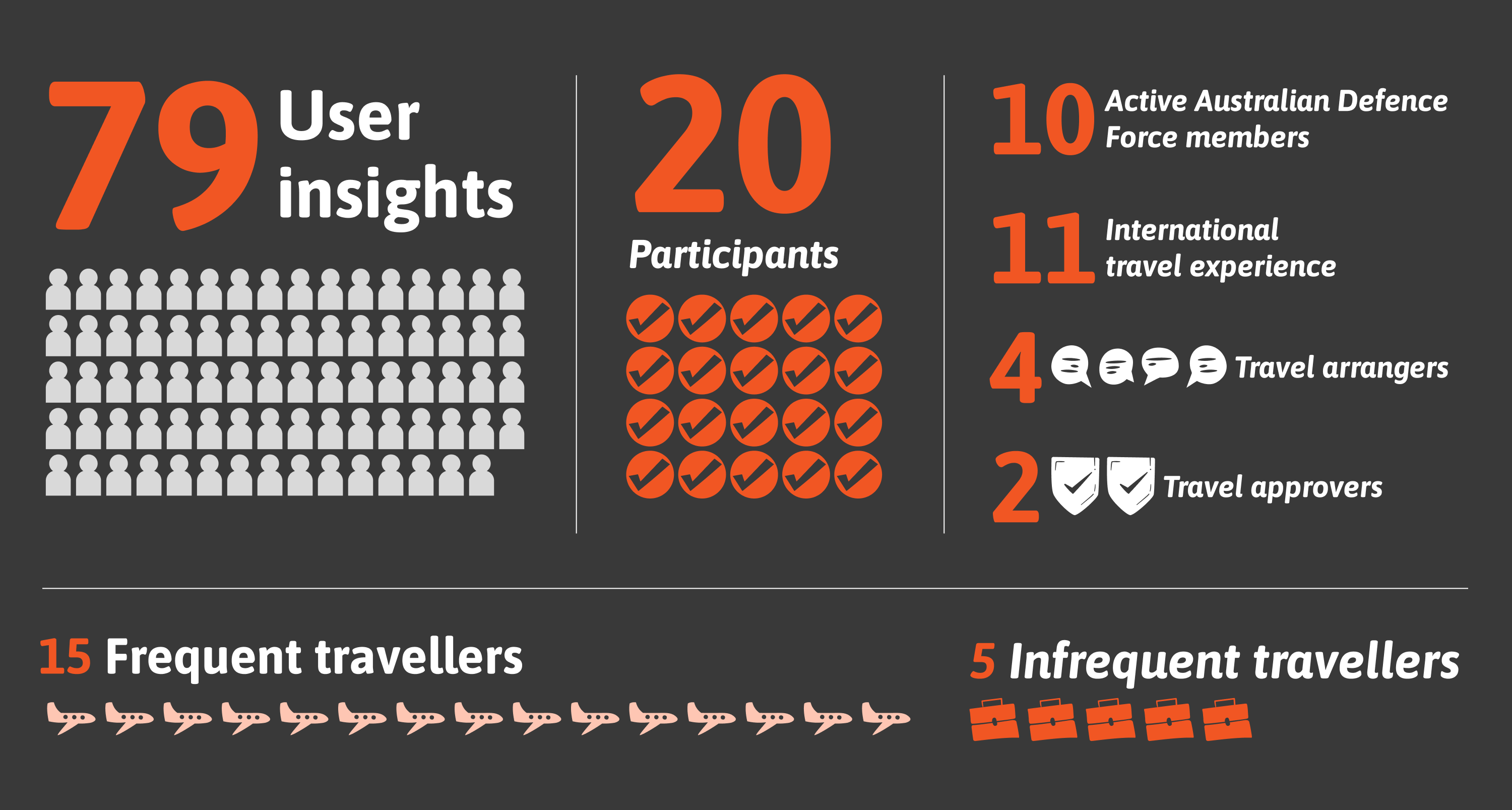
We conducted 20 contextual discovery interviews across travellers, admin staff and approvers – capturing their experience from trip planning to post-travel administration. Staying open and flexible to which aspects of their travel experience were the most frustrating whilst maintaining a consistent line of questions and prompts to capture the full journey.

Concept testing of alpha designs of international travel requests and new onboarding content using wireframes brought solution ideas to life. It allowed early validation of ideas, ensuring solutions were grounded in real user needs and helped de-risk and accelerate delivery.

Research summary showing 79 user insights gathered from 20 participants, including 10 Australian Defence Force members, 11 people with international travel experience, 4 travel arrangers and 2 travel approvers. Participants included 15 frequent travellers and 5 infrequent travellers.

Co-designing solutions with stakeholders across Defence

We worked closely with business stakeholders and SMEs to balance user needs with operational realities through deep engagement with 18 teams across policy, technology and service delivery.

Over 11 months, this included:

  • 50+ stakeholder syncs across core business areas that administer elements of travel policy, processes and systems
  • 60+ workshops to unpack current state challenges and co-design future state opportunities

This collaborative approach ensured solutions were not only desirable to users but viable and feasible for the teams that support travel.

Improving travel content, navigation and findability

A key priority and problem area to explore was how to uplift Defence's travel intranet experience.

We led an enterprise-wide content audit to identify duplication, gaps and inconsistencies in how travel guidance was communicated. Then we proposed a new, evidence-based information architecture that simplified navigation pathways and a strategy for how Defence could uplift and more easily maintain travel content into the future.

Additionally, priority content was re-written into clear, actionable guidance, particularly focused on supporting first time and infrequent travellers. This significantly improved how users found and understood travel information.
A scalable, data-driven model for continuous improvement

Jude delivered a modular, flexible design approach that enables Defence to continuously improve the travel experience. The work provides Defence with a user-validated model for change, clear alignment between user needs and business constraints, and a scalable framework for future enhancements.

By combining deep user insights with close stakeholder collaboration and data insights, this work has laid the foundation for long-term transformation. This has equipped Defence to deliver clearer and more accessible travel information, more efficient and user-friendly processes, and ongoing improvements driven by evidence and real user needs.

Tech we used

  • Design double diamond
  • DVF framework (user desirability, business viability, technical feasibility)
  • User journey mapping
  • 1:1 user interviews
  • User surveys
  • Card sort
  • User goal and task model
  • Mapping and visualisations
  • Co-design sessions
  • Concept testing
  • SAFe / agile delivery
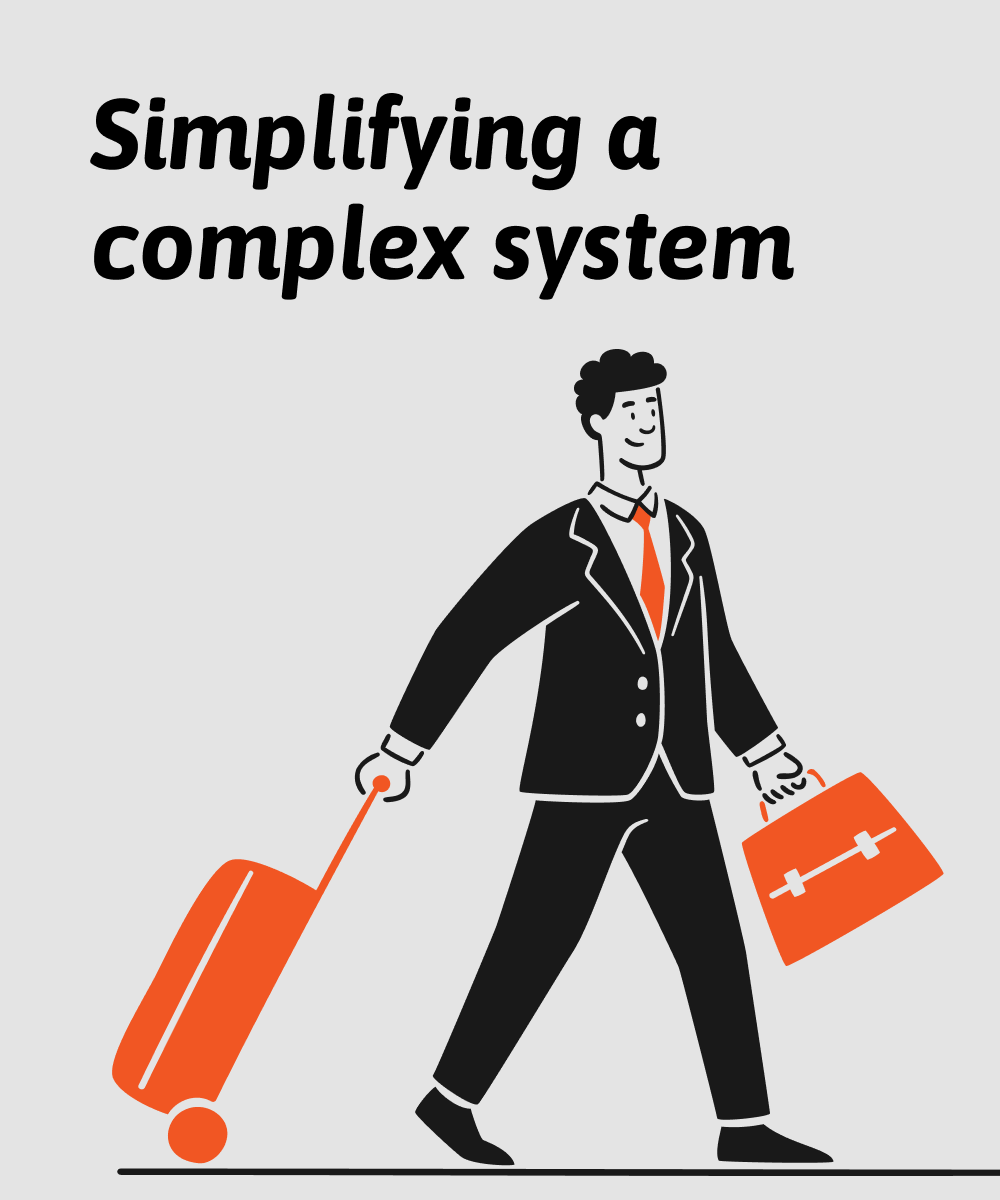
Cover image with the heading "Simplifying a complex system". An illustration shows a business traveller walking while pulling an orange suitcase and carrying an orange briefcase against a light grey background.