DCCEEW: Nature Positive Matters

A Knowledge Hub driving meaningful action for nature

Building a Knowledge Hub that turns complexity into action

The Nature Positive Matters platform set out to do more than share information. It needed to help businesses, government and industry take meaningful action towards a nature positive economy.

At the centre of this was the Knowledge Hub, a growing ecosystem of resources, insights and tools designed to make complex environmental information easier to find, understand and use, particularly when considering nature in business decision making.

Working alongside Kirra Services, we partnered with DCCEEW to design and deliver a flexible, scalable experience that supports both first-time users and subject matter experts, while evolving alongside the movement it supports.
What we did

  • UX and UI design
  • Information architecture
  • Content design
  • Drupal development
  • Component and system design
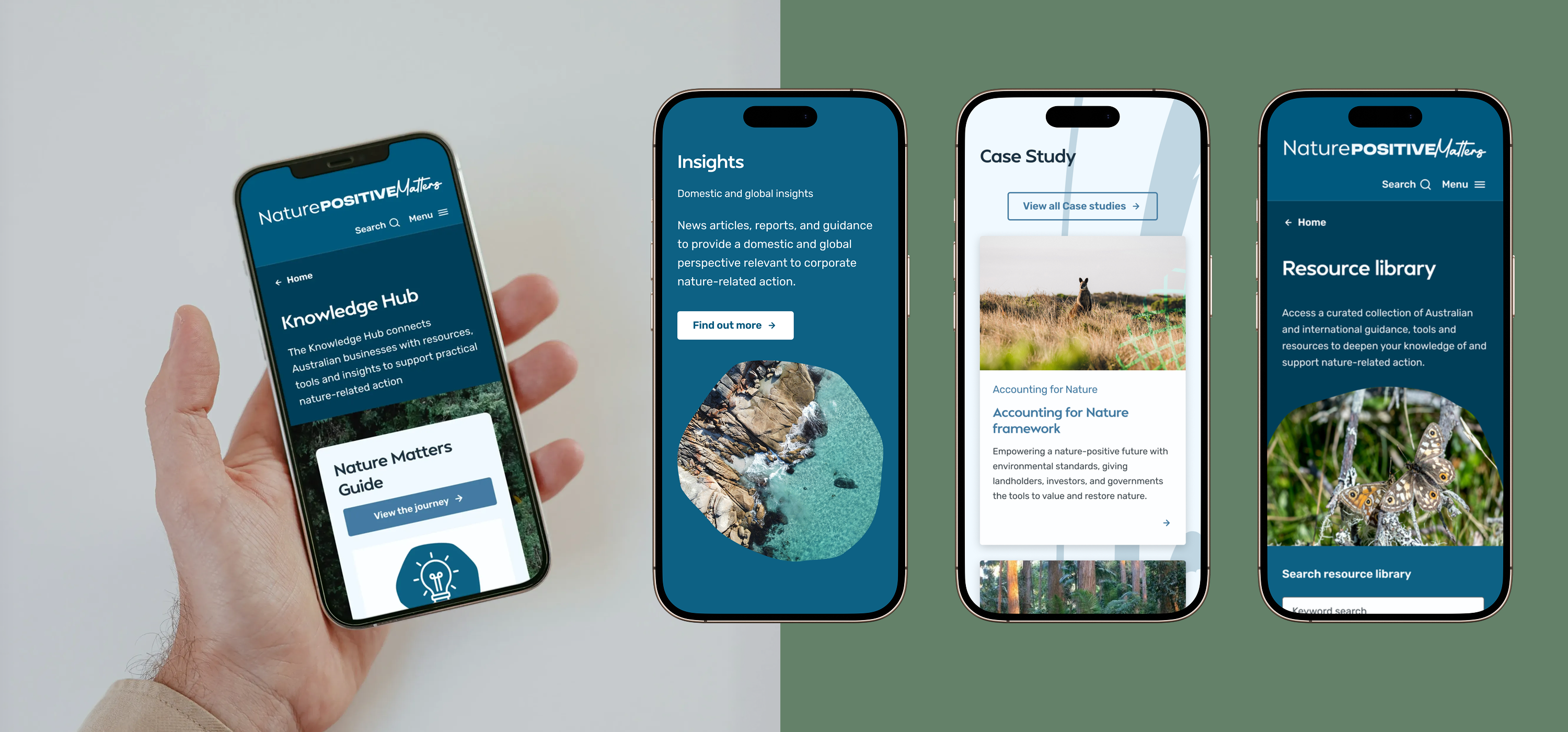
A smartphone and three mobile screens showing the Knowledge Hub's digital library, including Insights, Case Study and Resource library pages, beside the headline 'A digital library of resources to support nature related action'.

Designing for discoverability at scale

The challenge was clear. The volume and complexity of content would continue to grow, but the experience still needed to feel simple and intuitive.

We approached this through a strong information architecture, underpinned by Drupal’s content modelling capabilities. Using content types, taxonomies and structured relationships, we created a system that connects content in meaningful ways.

This allowed us to balance:

  • Curated pathways for guided exploration
  • Automated relationships to surface relevant content
  • Consistent filtering and search across the hub

The result is a Knowledge Hub that feels cohesive, even as the content ecosystem expands.

Turning content into a connected experience

Rather than treating resources as isolated pieces, we designed the Hub as a connected content system.

Every article, guide, or resource is part of a broader network. Linked through shared themes, topics and user intent. This improves discoverability while reducing the need for manual curation.

From a user perspective, this means:

  • Clear entry points into complex topics
  • Seamless movement between related content
  • Multiple pathways depending on knowledge level or goals

For editors, it creates a more efficient publishing model that scales without adding overhead.

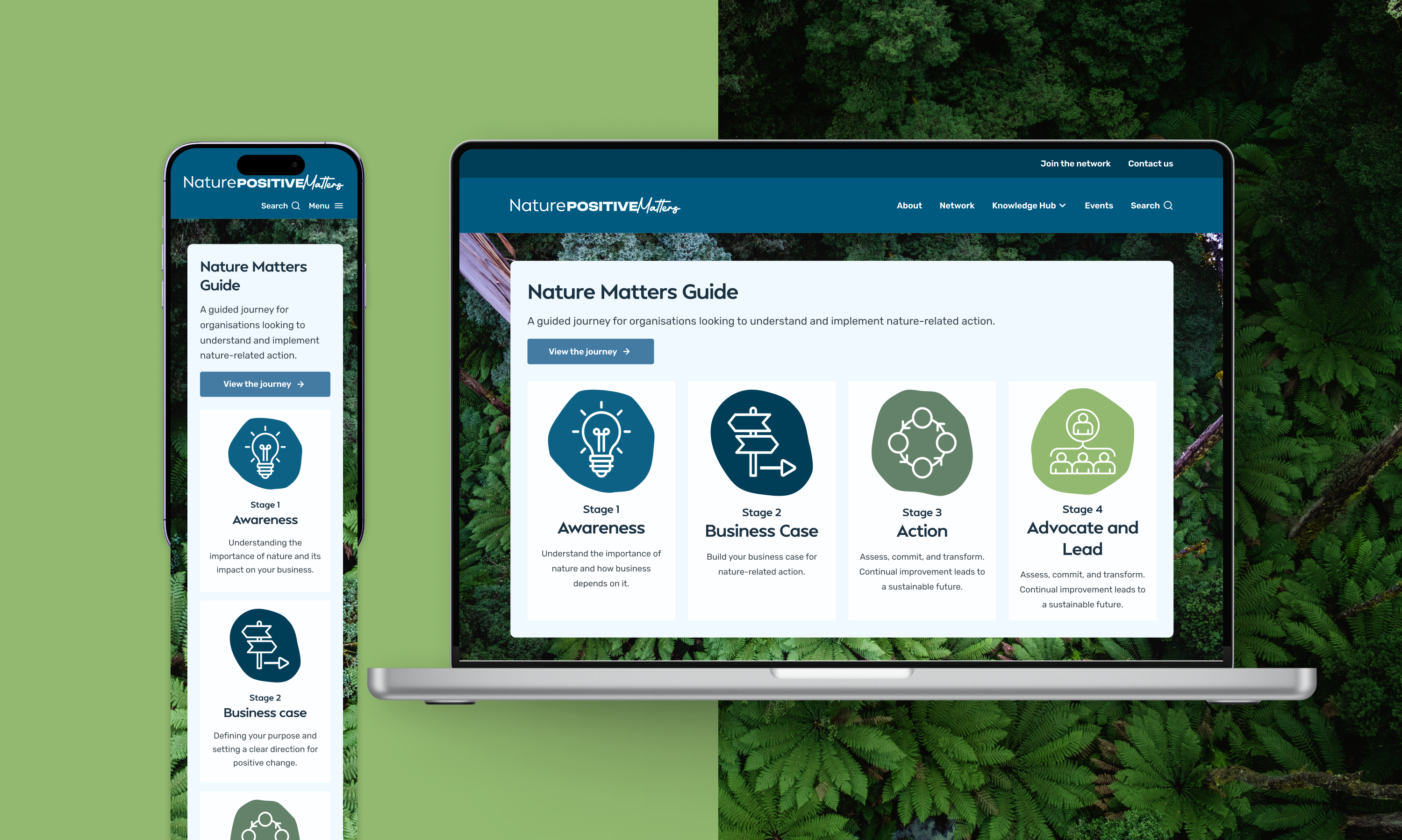
A laptop and smartphone showing the Nature Matters Guide, a four-stage journey from Awareness and Business Case to Action and Advocate and Lead, set against a green foliage background.

A flexible system for evolving content

The Knowledge Hub was designed to grow over time without requiring structural rework.

We built a modular content framework using reusable components and paragraphs, allowing content authors to create rich, structured pages while maintaining consistency across the site.

This flexibility supports a wide range of content types, from:

  • Practical guidance and frameworks
  • Research and policy insights
  • Case studies and industry examples

It also ensures new content can be added quickly, without compromising the overall experience.

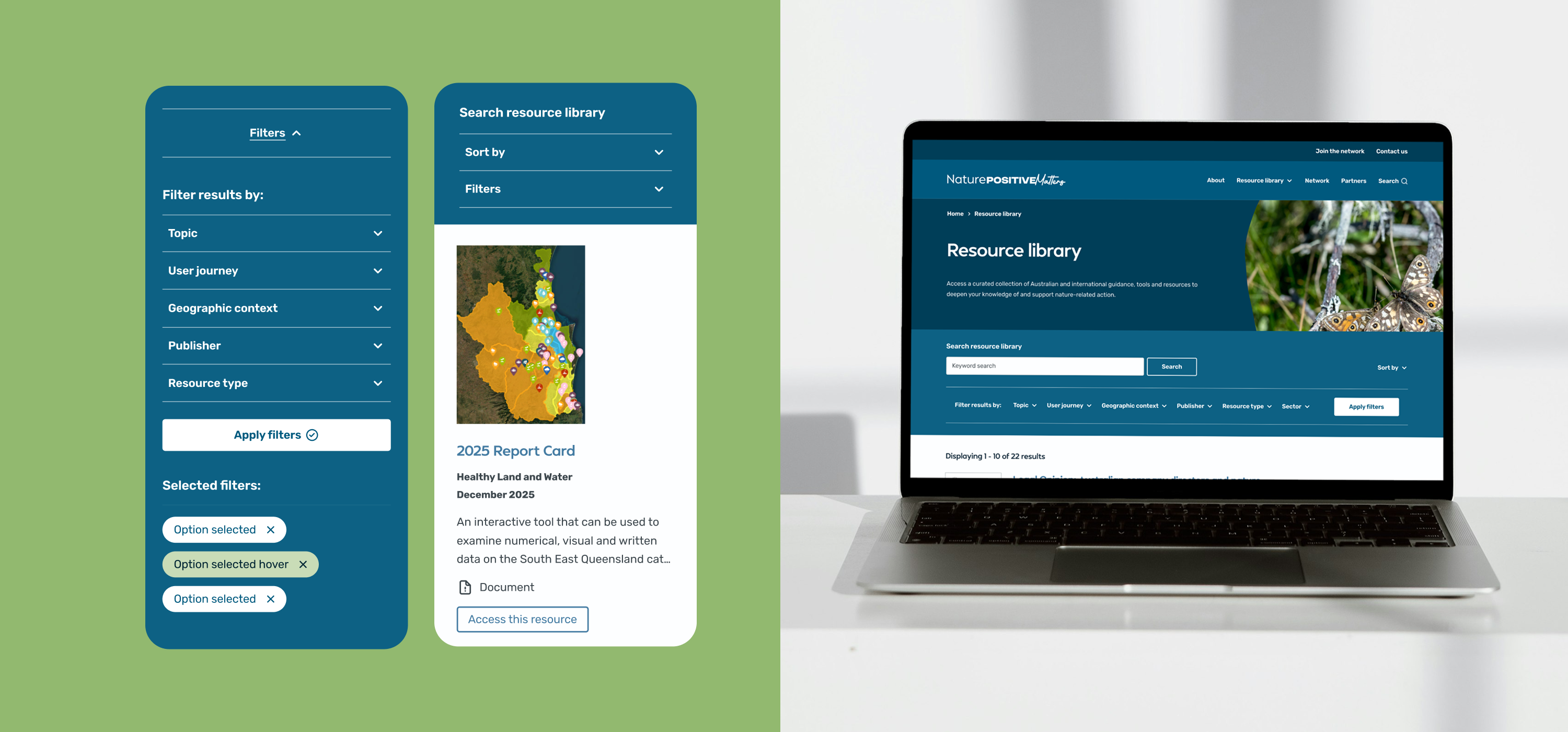
A laptop showing the Knowledge Hub Resource library page beside a mobile filter panel, highlighting multiple filter options for quick results, clear scannable results and support for search refinement.

Grounded in real user behaviour

To ensure the Hub worked for its diverse audience, we validated the design through usability testing with representative users.

These sessions revealed how people:

  • Navigate unfamiliar topics
  • Interpret terminology
  • Use filters and search to find relevant content

The insights helped refine structure, labelling and interaction patterns, ensuring the experience supports both experts and those new to the space.

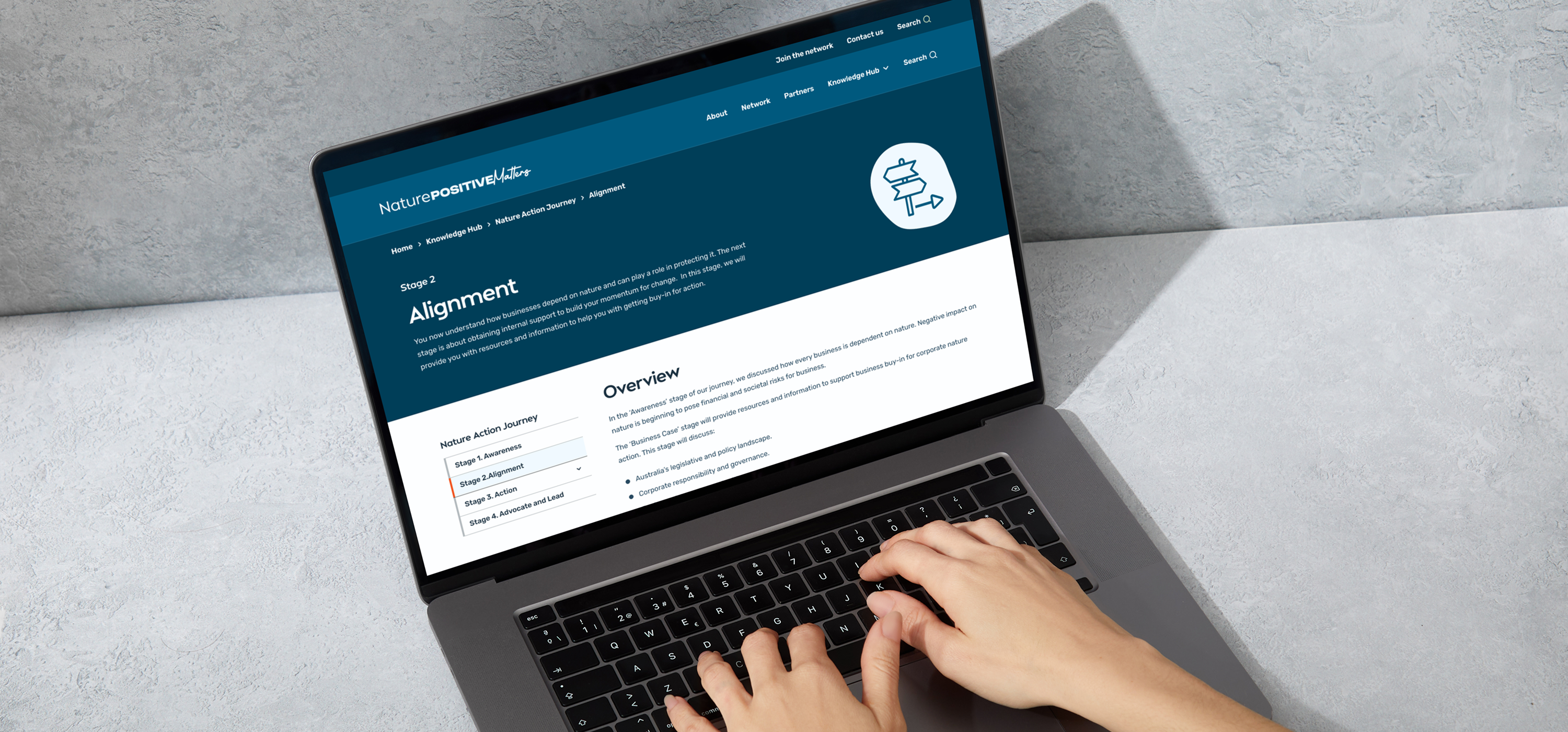
A person typing on a laptop displaying the Knowledge Hub's Alignment stage page with an overview section.

Built for sustainability and independence

A key goal was to enable the client team to manage and evolve the Knowledge Hub independently.

We delivered an **intuitive editorial experience**, supported by:

  • Clear content structures
  • Reusable components
  • Automated content relationships

This reduces reliance on technical teams while ensuring the platform remains consistent, accessible and easy to maintain.

A future-ready foundation for knowledge sharing

The Knowledge Hub plays a central role in positioning Nature Positive Matters as a trusted, authoritative source of guidance for businesses.

It demonstrates how thoughtful design and content architecture can transform complex subject matter into a practical, engaging digital experience, one that supports awareness, engagement and real-world action

Tech we used

  • GovCMS SaaS
  • Drupal 10
  • CivicTheme
  • Figma
  • Google Analytics
  • Jira
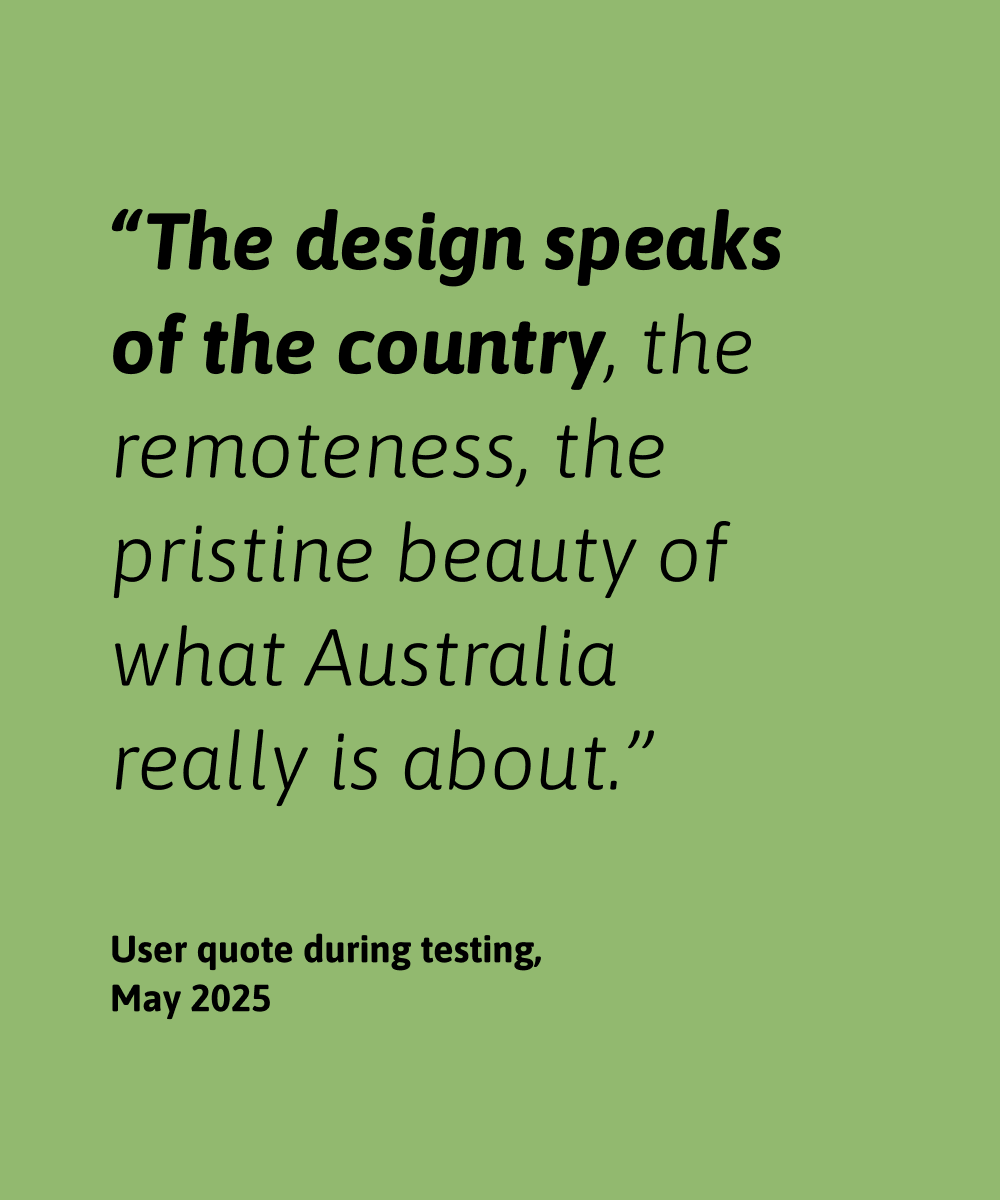
A green graphic featuring the quote "The design speaks of the country, the remoteness, the pristine beauty of what Australia really is about," attributed to a user during testing, May 2025.